Different types of saree drapes:
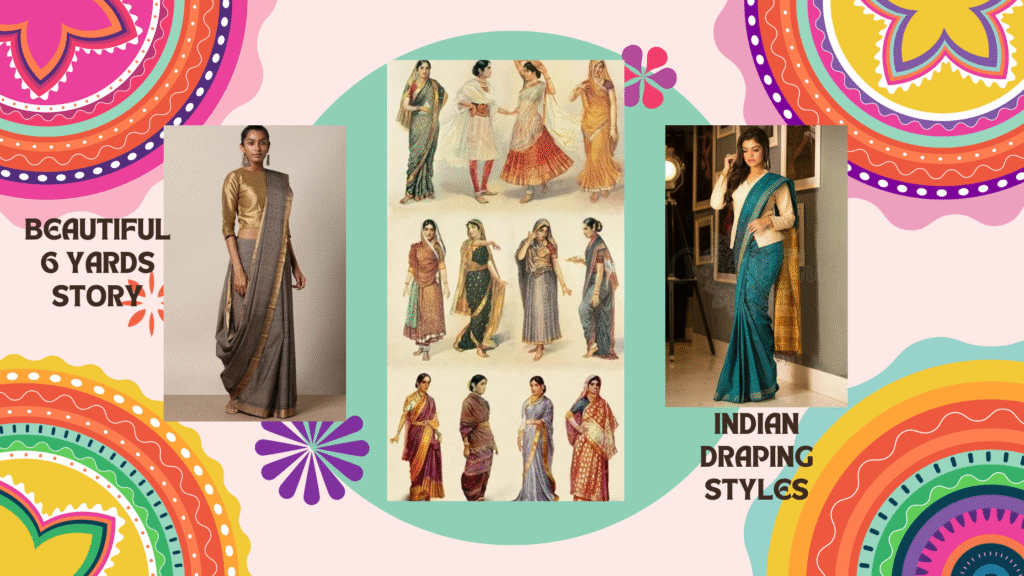
Ultimate Guide to Saree Draping Styles:
India is a diverse land known for its rich cultural heritage and traditions, each with its faith, food, dress and rituals. One common tradition that Indians can take pride in is the saree. India is known worldwide for its variety of sarees made using different fabrics and methods. Sarees can be draped in different styles, and each drape has a significant history. In this blog, we will take a journey down the history of India’s different saree wearing types and draping styles.
A Saree draping is an art in itself— each style changes the vibe of the outfit, making it more traditional, modern, formal, or trendy.
The sarees for women are beautiful garments, and equally stunning are their draping styles. Various saree draping styles go for different settings. It can be a beautiful blend of tradition and modernity for weddings. For a reception, it can be a gown-like drape. For an office event, you can add a smart jacket and belt to the drape. For sangeet, the drape can be in the form of a dhoti. There are draping methods that vary as per the region and tradition. You can give a distinct touch to a saree drape for a cocktail and dance night. So, the art of saree draping knows no bounds and is full of endless possibilities. Here is the ultimate guide to saree draping styles for different tastes and personalities.
About Saree Draping:
Saree draping is not just about adorning yourself with the latest sarees. It is about transforming a piece of nine-yard fabric into a traditional wonder. From traditional seedha pallu, ulta pallu to modern twists of wearing it like a lehenga or gown, the saree draping requires skill, creativity, and practice. There is something magical, cultural, and royal about draping a saree. Watching a fabric come to life with your touch and self-expression is innovation and experimentation. There are countless styles and techniques of saree draping that middle-aged, elderly, and young women opt for. The pleats, delicate folds, the border, and the pallu are testament to the saree’s beauty and craftsmanship. Explore the world of saree designs and draping.
Saree draping is an art form in India because it transforms six yards of fabric into a display of grace, elegance, and personal style, reflecting deep cultural heritage and regional identity. Different draping styles, such as the Nivi drape of Andhra Pradesh or the Bengali drape, are unique to specific regions and embody their traditions, craftsmanship, and social norms. The art involves precise pleats, folds, and pallu placements to create a flattering silhouette and express the wearer’s identity, making the saree a versatile canvas for both traditional elegance and contemporary fashion.
India features lots of saree draping styles, each tied to a specific region, such as the Nivi style (Andhra Pradesh) with its front pleats and shoulder pallu, the Gujarati and Seedha Pallu style with the pallu at the front, the Maharashtrian Nauvari style with its dhoti-like appearance, and the Bengali Atpoure drape with two pallus. Other styles include the Coorgi drape (Karnataka), Madisaru (Tamil Nadu), and the Mekhela Chador from Assam.
Here’s a list of popular saree draping styles you can explore:
Traditional Drapes:
-
Nivi Style (Classic):
-
Origin: Andhra Pradesh
-
Most common drapes — many pleats tucked in front, pallu over the left shoulder.
-
-
Gujarat’s Seedha Pallu:
-
Pallu comes to the front from the back, covering the blouse.
-
Perfect for weddings and festive occasions.
-
-
Maharashtrian Nauvari:
-
Worn without a petticoat, like a dhoti.
-
Comfortable and regal, often worn during rituals and classical dances.
-
-
Tamilian Madisar:
-
Tamil Brahmin women wears 9 yards of saree.
-
Complex drapes as well as very elegant for traditional functions.
-
-
Bengali Draping:
-
Box pleats with a pallu coming from the back and thrown over the right shoulder.
-
Iconic look with a big red bindi and traditional jewellery.
-
Regional & Cultural Drapes:
-
Assamese Mekhela Chador:
-
Two-piece drape with pleats in front and pallu wrapped around.
-
-
Coorgi Style (Kodagu):
-
Pleats falls at the back, pallu draped from behind over the shoulder.
-
-
Malayali Mundum Neriyathum:
-
White and golden color border saree draped like a two-piece set.
-
-
Odisha Draping:
-
Similarly a Bengali style but pleats are tucked slightly differently.
-
Modern & Fusion Drapes:
-
Butterfly / Bollywood Style:
-
Pallu is very thinly pleated, showing off the midriff.
-
Popular for glamorous events.
-
-
Lehenga Style Saree:
-
Saree draped with multiple pleats all around, giving a lehenga look.
-
-
Pant Style Drape:
-
Saree draped over pants or leggings instead of a petticoat.
-
Trendy, Indo-Western vibe.
-
-
Dhoti Style Saree:
-
Saree wrapped like a dhoti with pallu styled in various ways.
-
Fusion and comfortable.
-
-
Gown Style Saree:
-
Pre-stitched or draped to resemble a gown with a saree flair.
-
-
Cape Saree Drape:
-
Saree paired with a cape or jacket instead of the traditional pallu style.
-
Each draping style can totally transform the saree’s look—from elegant and traditional to bold and modern.